
Buckwheat

Explore the story and character of this honey.

Select Collection

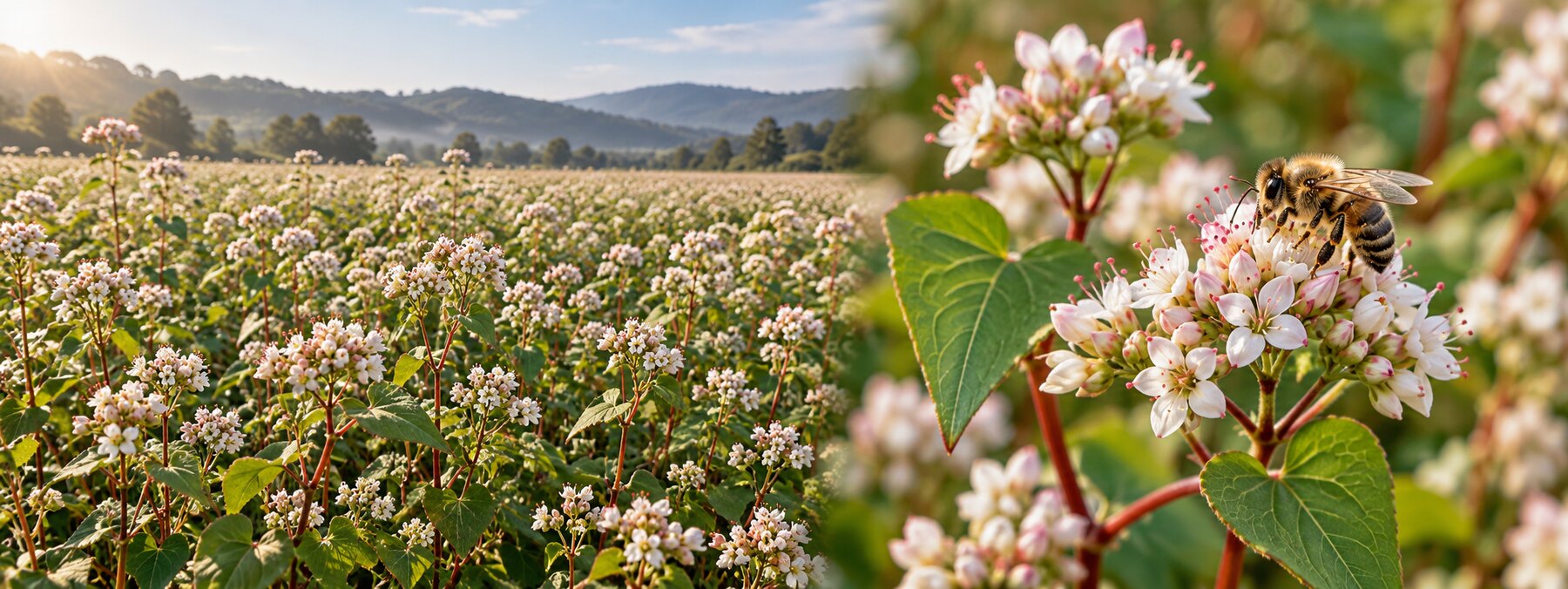
A farm field of flowering buckwheat beside a close view of buckwheat flowers and a honey bee
Buckwheat in bloom, from a broad farm field to its delicate clusters of flowers.

Flavor and Character

Buckwheat honey is one of the darkest and boldest honeys in our collection. Many tasters perceive it as less sweet than lighter honeys because its intense malty, earthy, and slightly bitter notes balance its natural sweetness. It is commonly described as full bodied and deeply aromatic, with rich notes of molasses, dark caramel, toasted grain, and earth. Its powerful flavor makes it very different from mild varieties such as clover or orange blossom honey.

This is a honey for anyone who enjoys strong flavor. It works especially well with hearty breads, oatmeal, coffee, barbecue sauces, marinades, strong cheeses, and recipes in which a lighter honey might disappear.

Videos and More

What Makes Buckwheat Special?

  • Despite its name, buckwheat is not a type of wheat. It is a broadleaf crop in the same plant family as rhubarb and sorrel. Farmers grow it both for its edible seed and as a useful cover crop.
  • Buckwheat fields are covered with small white or pale pink flowers, yet their nectar produces honey that is usually very dark brown and can appear almost black.
  • Buckwheat grows quickly. It can establish, bloom, and mature in about 70 to 90 days, making it useful between other farm crops.
  • Its dense canopy shades the soil and helps suppress weeds, while its fine roots help loosen the topsoil and gather phosphorus that may otherwise be difficult for plants to use.
  • The clusters of small white or pale pink blossoms provide nectar for honey bees and attract many other pollinators and beneficial insects.
  • Flowering may begin about three weeks after planting and can continue for several weeks, although the plant is sensitive to frost and performs best in cool, moist conditions.
  • Its deep flavor works especially well in marinades, barbecue sauces, hearty breads, and other recipes where a lighter honey could disappear.